Physical Address
304 North Cardinal St.
Dorchester Center, MA 02124
Physical Address
304 North Cardinal St.
Dorchester Center, MA 02124


Understanding useful Thai phrases for travelers provides a foundational linguistic tool for navigating Thailand’s everyday interactions. Thai is a tonal language with pragmatic strategies that emphasize politeness, social harmony, and contextual interpretation. Visitors frequently engage in brief service encounters—ordering food (see our guide “What Are Some Classic Thai Dishes? 12 Must-Try Dishes in Thailand!”), arranging transport, or asking for directions—where short, functional expressions paired with polite particles are sufficient.
Thai polite particles (kráp for male speakers and khá for female speakers) operate as discourse markers rather than grammatical elements, signaling respect and softening directness. Incorporating these particles improves the overall reception of a traveler’s Thai and aligns with expected social norms.
This expanded guide includes 20 essential expressions, contextual examples, transliteration, and cultural notes relevant to Thai for travel.
Thai communication emphasizes respect and social harmony. Polite particles—kráp and khá—soften requests and make short expressions appropriate in service situations. Travel interactions often rely on brief, predictable exchanges rather than long sentences. Tone of voice and calm delivery contribute to perceived politeness. Understanding these features helps travelers use Thai more effectively.

Thai tends to avoid overt directness in requests. Instead of long sentence structures such as “Could you please…”, Thai uses shorter command-like phrases softened with kráp/khá.
Example:
ไป…ครับ / ค่ะ (bpai … kráp/khá) literally means “go …” but functions as “Please take me to …” in taxi contexts.
Thai uses five tones—mid, low, falling, high, rising. Tones change meaning, but in travel contexts, intelligibility often remains high even with imperfect tones, especially when supported with gestures or contextual clues.
Travelers typically operate in the neutral/formal register. Polite particles automatically place an utterance into a respectful domain, making them highly useful for beginners.
“ผม” (phǒm) and “ฉัน” (chǎn) are default first-person pronouns. Omission of pronouns is common when context is clear.
Thai: สวัสดี
Male: sawàt-dii kráp
Female: sawàt-dii khá
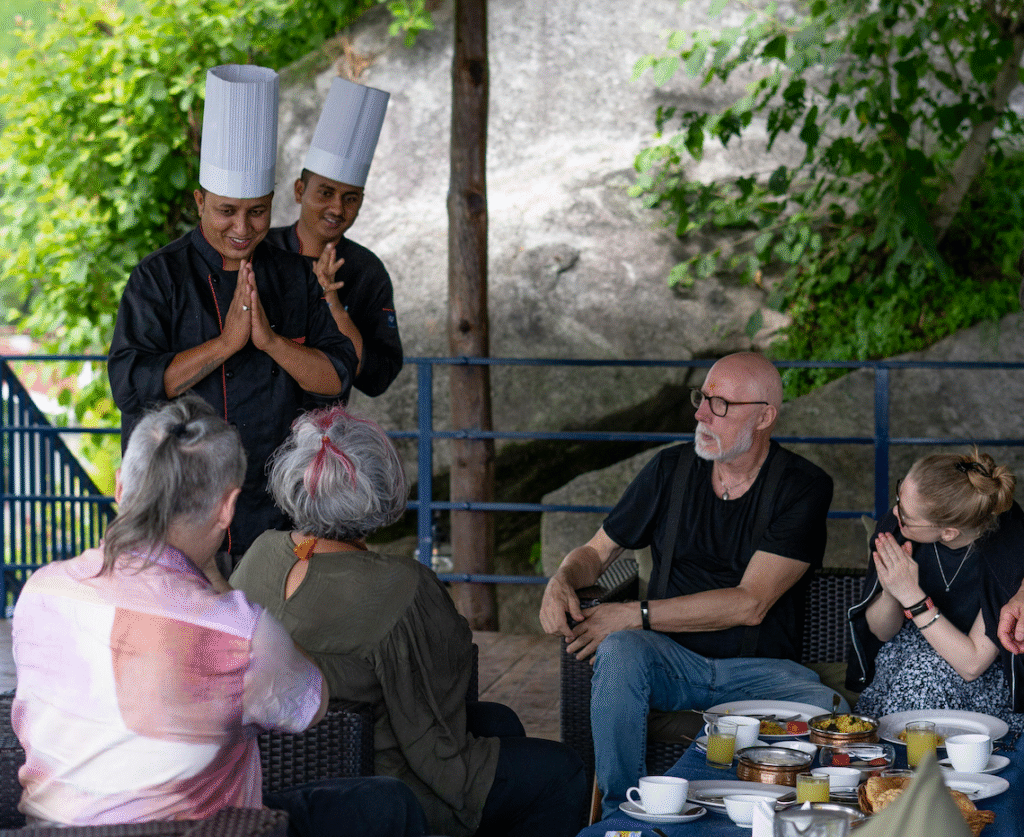
Use case: Used throughout the day for both casual and formal interactions, including entering shops, greeting hotel staff, or meeting guides.
Notes: This greeting is standard regardless of time; no specific morning or evening greeting is required.
Thai: ขอบคุณ
Male: khàwp-khun kráp
Female: khàwp-khun khá
Use case: For expressing gratitude in shops, food stalls, taxis, or when receiving assistance.
Notes: Shortened versions without polite particles exist but are less appropriate in service interactions.
Thai (Yes): ใช่
Male: châi kráp
Female: châi khá
Thai (No): ไม่ใช่
Male: mâi châi kráp
Female: mâi châi khá
Use case: Used for confirmation, such as during hotel check-in, transportation negotiations, or food orders.
Thai: ขอโทษ
Male: khǎw-thôot kráp
Female: khǎw-thôot khá
Use case: Used when passing through crowds, getting someone’s attention, or apologizing for minor inconveniences.
Notes: Tone is mild and not associated with deep emotional apology.
Thai: อันนี้ราคาเท่าไร
Male: an níi raa-khaa tâo-rài kráp
Female: an níi raa-khaa tâo-rài khá
Use case: Essential in markets, souvenir shops, and street stalls.
Notes: “อันนี้” (an níi) is appropriate for items seen or held; replace with “นี่” (nîi) for general pointing.
Thai: เอาอันนี้
Male: ao an níi kráp
Female: ao an níi khá
Use case: Used to indicate final purchasing decisions at shops, cafés, or food vendors.
Notes: “เอา” (ao) is direct but common; context makes it polite when combined with kráp/khá.
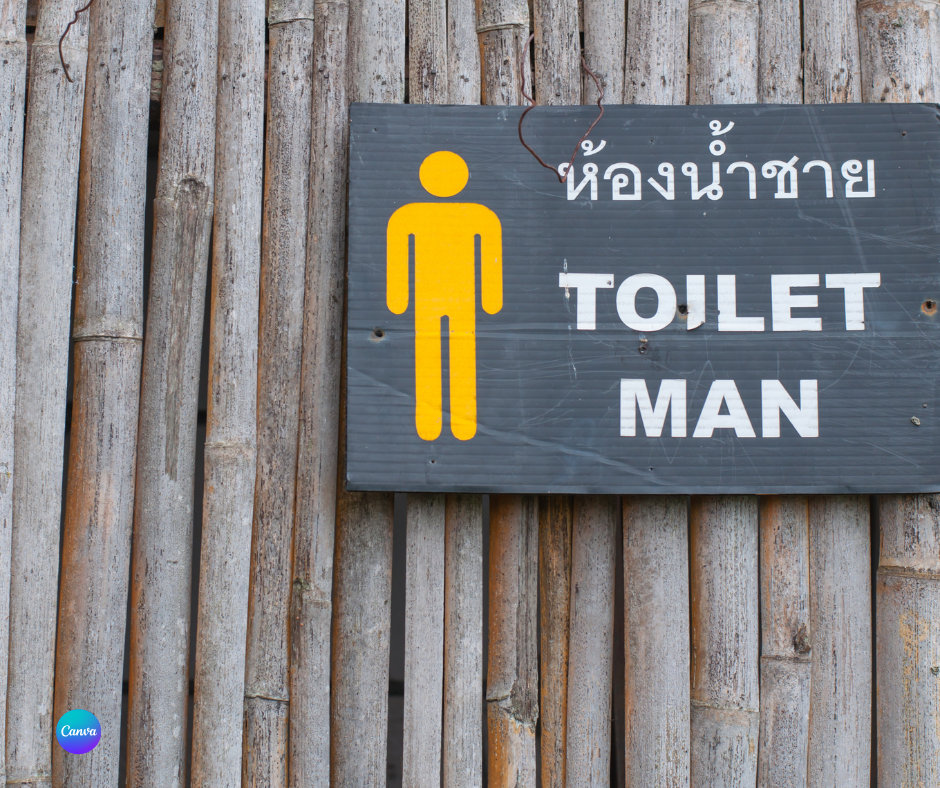
Thai: ห้องน้ำอยู่ที่ไหน
Male: hâwng-náam yùu thîi-nǎi kráp
Female: hâwng-náam yùu thîi-nǎi khá
Use case: Used in malls, restaurants, transport hubs, and public spaces.
Thai: ไม่เข้าใจ
Male: mâi khâo-jai kráp
Female: mâi khâo-jai khá
Use case: Useful in conversations with drivers, hotel staff, or vendors when clarification is needed.
Notes: Thai speakers often naturally adjust their speed or vocabulary if they hear this phrase.
Thai: พูดอีกครั้งได้ไหม
Male: phûut ìik khráng dâai mái kráp
Female: phûut ìik khráng dâai mái khá
Use case: For communication repair during directions, instructions, or service interactions.
Thai: พูดช้ากว่านี้ได้ไหม
Male: phûut cháa gwàa níi dâai mái kráp
Female: phûut cháa gwàa níi dâai mái khá
Use case: Particularly helpful when interacting with taxi drivers, vendors, or guides.
Thai: …อยู่ที่ไหน
Male: … yùu thîi-nǎi kráp
Female: … yùu thîi-nǎi khá
Example: “สถานีรถไฟอยู่ที่ไหนครับ/คะ”
sa-thǎa-nii rót-fai yùu thîi-nǎi kráp/khá
(Where is the train station?)
Use case: Geographic and navigation inquiries.
Thai: ไป…ครับ/ค่ะ
Male: bpai … kráp
Female: bpai … khá
Example: bpai sathǎa-nii MRT kráp/khá
(Please take me to the MRT station.)
Notes: Short, efficient phrasing widely used in Thai for transportation.
Thai: ขอน้ำหนึ่งขวด
Male: khǎw náam nùeng khùat kráp
Female: khǎw náam nùeng khùat khá
Use case: Ordering bottled water in convenience stores, restaurants, or street vendors.
Thai: นิดหน่อย
Male: nít-nàwy kráp
Female: nít-nàwy khá
Example in context:
“เผ็ดนิดหน่อยครับ/ค่ะ”
phèt nít-nàwy kráp/khá
(A little spicy.)
Use case: Food customization or describing preferences.
Thai: ไม่เผ็ด
Male: mâi phèt kráp
Female: mâi phèt khá
Use case: In restaurants and markets where chili levels vary.
Notes: Thai cuisine often includes chili by default; this expression is widely recognized.
Thai: ฉันแพ้…
Male: phǒm pháe … kráp
Female: chǎn pháe … khá
Example: phǒm/chǎn pháe loo-tîa khá/kráp (I am allergic to peanuts.)
Notes: Male speakers typically use “ผม” (phǒm); female speakers use “ฉัน” (chǎn).
Thai: หากำลังหา…
Male: gàm-lang hǎa … kráp
Female: gàm-lang hǎa … khá
Example: gàm-lang hǎa raan câmpâi kráp/khá
(I’m looking for a pharmacy.)
Use case: Asking local residents or staff for assistance.
Thai: ช่วยด้วย
Male: chûai dûai kráp
Female: chûai dûai khá
Use case: Urgent but non-hostile situations such as lost items or minor accidents.
Notes: Tone conveys urgency; polite particles soften delivery without reducing seriousness.
Thai: อันนี้เผ็ดไหม
Male: an níi phèt mái kráp
Female: an níi phèt mái khá
Use case: Helps prevent miscommunication when ordering unfamiliar dishes.
Thai: อิ่มแล้ว
Male: ìm láew kráp
Female: ìm láew khá
Use case: Used after meals in both casual and formal dining contexts.
One of the most frequent mistakes is leaving out kráp or khá. While the sentence may still be understood, omitting these particles can make statements sound abrupt or impolite, especially in service interactions such as ordering food, taking a taxi, or asking for directions.
Thai is a tonal language with five distinct tones. Incorrect tone usage can change meaning, but in travel contexts, small mistakes are usually understood when paired with gestures or context. Beginners should prioritize clarity and moderate speed over perfect tone reproduction.
Translating English sentences word-for-word often produces awkward or unnatural Thai. For example, saying “Can I go to the restroom?” literally may be grammatically correct but less idiomatic than the simpler Thai form ห้องน้ำอยู่ที่ไหน (hâwng-náam yùu thîi-nǎi).
Informal particles like อ่ะ, งี้, or แบบว่า are common among Thai youth but can appear imprecise or confusing when used by travelers. Simple, clear phrases are usually more effective.
Thai polite particles (kráp for men and khá for women) play an essential role in social interaction. They function as pragmatic markers rather than grammatical components. They signal respect, reduce social distance, and create a cooperative atmosphere during service encounters. While omitting these particles does not render speech incorrect, consistent use results in smoother communication, especially for travelers interacting with locals in formal or semi-formal contexts.
Politeness also appears through tone of voice, avoidance of direct confrontation, and preference for gentle requests. For this reason, many Thai expressions for requests, including transportation and food orders, are shortened yet softened with polite endings.