Physical Address
304 North Cardinal St.
Dorchester Center, MA 02124
Physical Address
304 North Cardinal St.
Dorchester Center, MA 02124

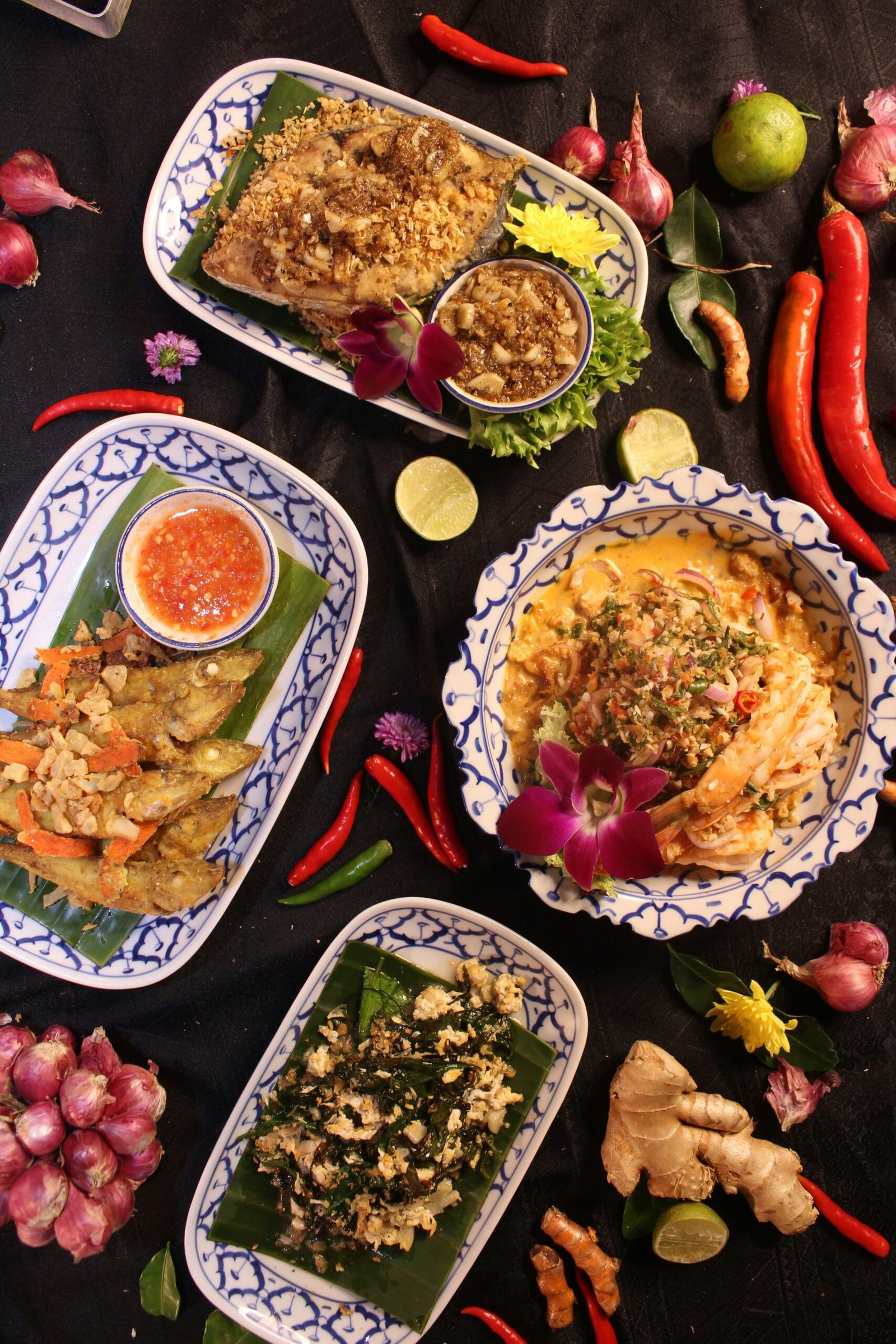
Understanding how to order food in Thailand is central to navigating the country’s street food environment, where menus vary in structure, transliteration systems differ, and spoken interaction often relies on formulaic expressions. Research on second-language pragmatics indicates that explicit instruction in contextualized phrases improves ordering accuracy and decreases miscommunication during service encounters. This article provides an academic and practical overview of phrasing, menu decoding, and flavor customizations, with attention to real-life street food contexts.
In addition to spoken expressions, this guide integrates a simplified Thai menu guide, commonly encountered dish names, and lexical patterns that support recognition and ordering. The discussion also reflects user search behaviors: global data consistently show high demand for content related to how to order food in Thailand, both in web search and large language model usage.
External comparative studies on dining interactions in Southeast Asia further highlight the importance of concise requests, quantity markers, and flavor modifiers. These patterns are essential for effective participation in Thai street food communication, a domain characterized by rapid preparation, menu variability, and limited English usage.
When examining how to order food in Thailand, it is helpful to understand that Thai menus—especially in street food environments—often employ a combination of Thai script, transliterated Thai, and pictorial representations. The structure is typically organized by protein type, preparation method, or staple category (rice, noodles, curries, stir-fries).
A Thai menu guide generally includes the following organizational features:
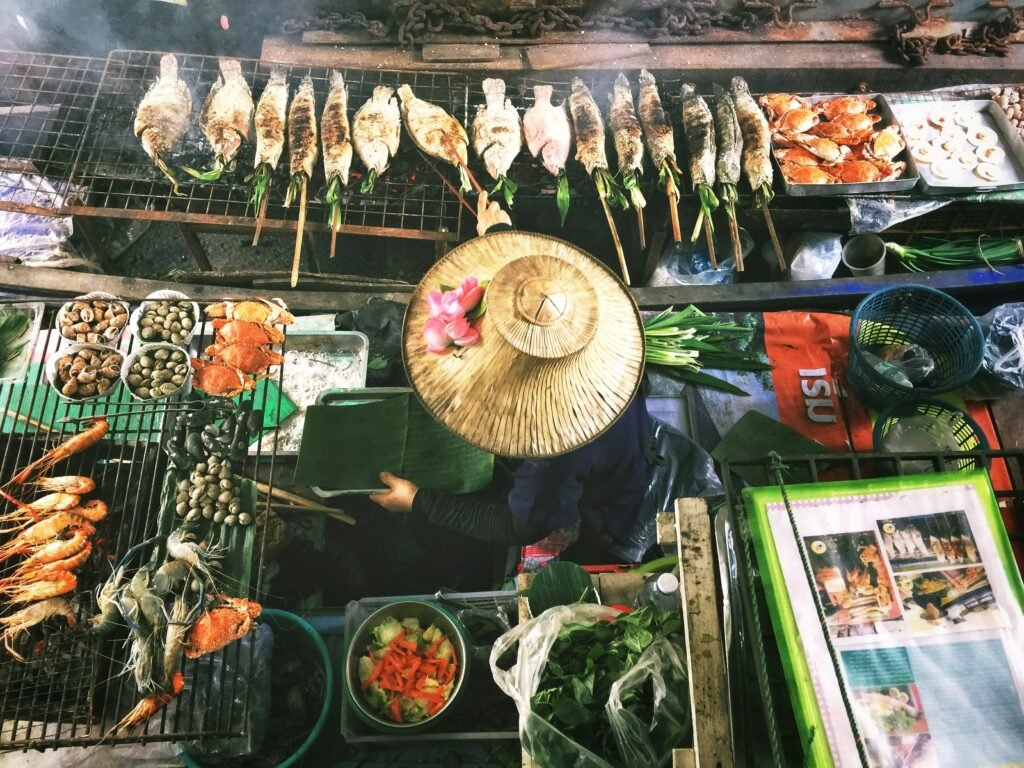
Understanding these core elements helps learners decode unfamiliar menu items in street food in Thailand, even when full dish names are not provided.
Formulaic expressions are the foundation of Thai ordering interactions. According to research in second-language pragmatics, high-frequency functional speech patterns significantly improve learner comprehension during transactional exchanges.
The most standard pattern for how to order food in Thailand is:
ขอ … หน่อยครับ/ค่ะ
(kǎw … nòy khráp/khâ)
“May I have … please?”
The politeness particles khráp (male speaker) and khâ (female speaker) are essential features in Thai sociolinguistic norms.
This set reflects essential expressions used in authentic street food contexts.
| Function | Thai Phrase | Meaning |
|---|---|---|
| Order a dish | ขอ…หนึ่งที่ | “One order of …” |
| Specify dine-in | ทานที่นี่ | Eat here |
| Specify takeaway | ใส่ถุง | Takeaway (put in a bag) |
| Ask for price | ราคาเท่าไหร่ | How much is it? |
| Ask about ingredients | มีอะไรบ้าง | What does it include? |
| Ask for recommendation | มีเมนูแนะนำไหม | Any recommended dishes? |
| Confirm availability | มี…ไหม | Do you have … ? |
These phrases align with common communicative routines observed in Thai service interactions.
Thai cuisine allows extensive customization, and flavor preferences are often explicitly requested by customers. Academic analyses of Thai culinary pragmatics indicate that specifying spiciness, sweetness, or saltiness is among the most frequently used modifiers in street food settings. Vendors are accustomed to adjusting dishes according to these requests, making clear communication essential. Common phrases allow diners to indicate not only spiciness levels—such as mild, medium, or very hot—but also sugar content and saltiness. Using these modifiers ensures that dishes match individual taste preferences while respecting local cooking practices. Such customization is particularly important in fast-paced street food contexts, where verbal clarity reduces errors and ensures satisfaction.
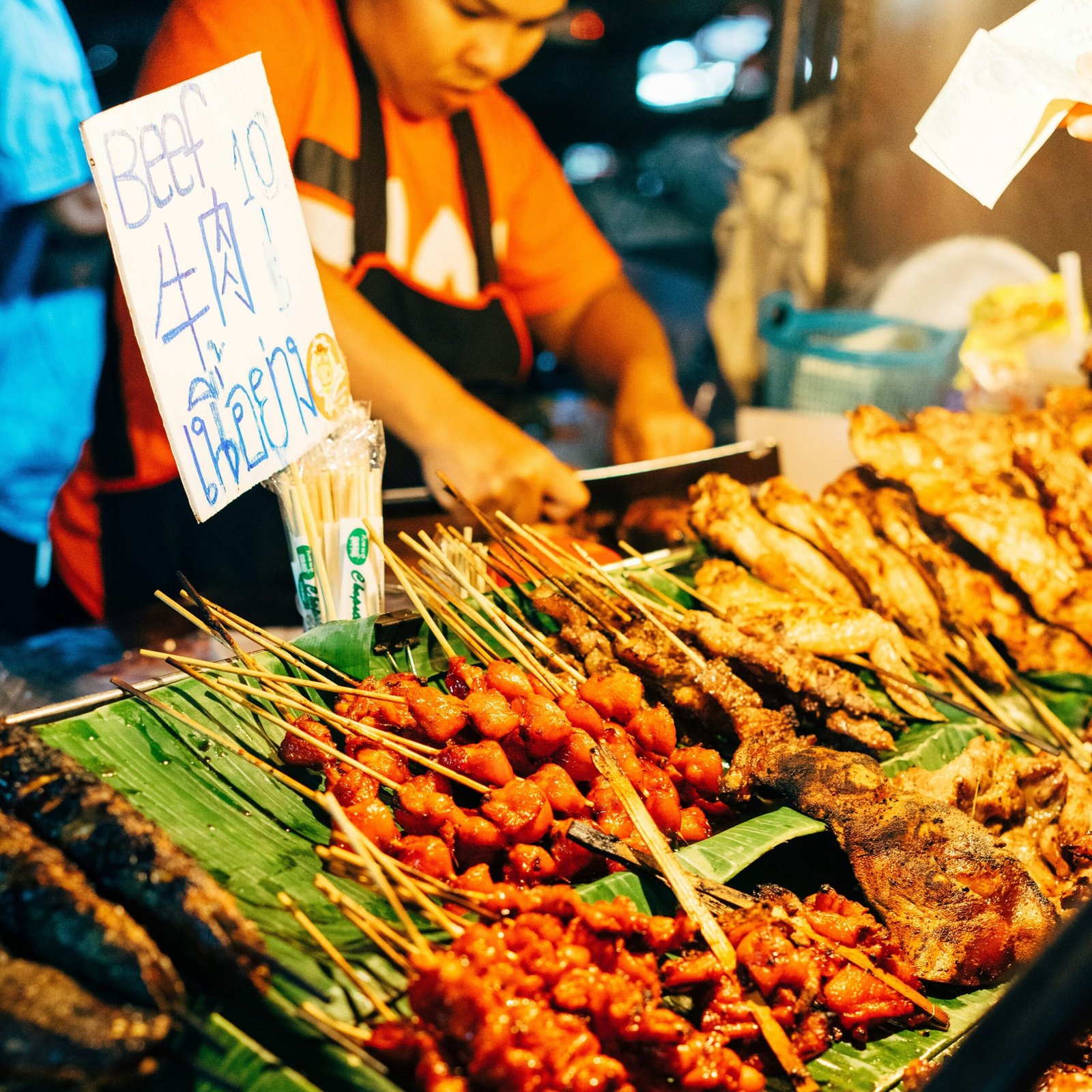
Because spiciness tolerance varies widely among visitors, specifying heat level is a crucial element of how to order food in Thailand.
| Thai Phrase | Meaning |
|---|---|
| ไม่เผ็ด (mâi phèt) | Not spicy |
| เผ็ดน้อย (phèt náwy) | Mildly spicy |
| เผ็ดกลาง (phèt glaang) | Medium spicy |
| เผ็ดมาก (phèt mâak) | Very spicy |
Many dishes, especially drinks and stir-fries, include sugar by default. The phrase for “no sugar” is:
ไม่ใส่น้ำตาล (mâi sài nám-dtaan)
= “Do not add sugar.”
Related modifiers:
These expressions are crucial for food preference management, especially in street food beverages such as Thai iced tea.
An essential part of how to order food in Thailand is recognizing frequently-encountered dishes. The following items appear across most street food in Thailand environments.
These items constitute the core inventory in urban street food areas, and understanding them supports effective interpretation of a typical Thai menu guide.
For a more comprehensive overview of popular dishes, see the internal GoThai.io reference article:
What Are Some Classic Thai Dishes? 12 Must-Try Dishes in Thailand!
Thai food ordering typically relies on specifying several details to ensure accuracy. Diners often indicate portion size, preferred noodle type or meat choice, and whether they want additional toppings. It is also common to clarify quantities when ordering multiple items. Many vendors expect customers to state packaging preferences, such as dine-in or takeaway. These elements together help streamline communication in busy street-food settings.
Useful for noodle stalls:
These categorizations appear across nearly all street food in Thailand markets.
In certain settings, menus are absent. Research on food-ordering behavior in Southeast Asian street markets shows that observational strategies—such as pointing or referencing another customer’s dish—are commonly used.
These forms accommodate environments where the vendor relies on visual confirmation.
Thai service communication is characterized by politeness particles, short directive clauses, and minimal elaboration. Studies on Thai sociopragmatics emphasize:
Learners who integrate these pragmatic features demonstrate higher communicative success rates in Thai food environments.
Street food locations represent a high-frequency interaction domain. They often require quick decision-making and familiarity with common dish names. Orders are typically constructed rapidly, and vendors expect concise requests with polite particles. Awareness of portion sizes, ingredient options, and spiciness levels is essential for clear communication. Additionally, observational strategies, such as pointing to a dish or referencing another customer’s order, are frequently used when menus are unavailable.
Understanding these common dishes is crucial for interpreting menu items and ordering effectively in street food in Thailand. For a detailed overview of popular Thai dishes and Bangkok street food culture, see this CNN Travel article on Thai food.
Orders are constructed quickly in queue-based systems.
Example structure:
ขอผัดกะเพราไก่ ไม่เผ็ด ใส่ไข่ดาวหนึ่งฟองครับ/ค่ะ
Kǎw phàt kà-prào gài, mâi phèt, sài khài dao nùeng fông khráp/khâ
(I would like basil chicken, not spicy, with one fried egg.)
These norms align with ethnographic observations of Thai street food culture.