Physical Address
304 North Cardinal St.
Dorchester Center, MA 02124
Physical Address
304 North Cardinal St.
Dorchester Center, MA 02124


Understanding how Thai tones work is a central part of learning the Thai language. Tones carry lexical meaning, and incorrect tonal production can create misunderstandings. While many learners find tonal systems challenging, clear explanations supported by linguistic research make the topic more accessible. This article provides a structured, academic breakdown of Thai tones, including tone classes, live and dead syllables, and core tone rules. The goal is to provide a simplified yet accurate overview that aligns with documented descriptions of Thai phonology.
External linguistic analyses such as those available through the Royal Institute Dictionary, the Thai National Corpus, and academic publications on tonal phonology support the explanations presented here. A general reference for foundational descriptions of Thai phonology can be found in works such as Abramson (1962) and subsequent analyses available through reputable resources (e.g., Encyclopaedia Britannica’s Thai language overview: https://www.britannica.com/topic/Thai-language).
An internal, supportive reference on vocabulary development for Thai learners is available on GoThai.io:
“Why Thai Flashcards Improve Vocabulary Learning”
This article avoids overcomplication while remaining linguistically accurate, making it suitable for beginners seeking a trustworthy explanation.

To understand how Thai tones work, it is necessary to define what a tone is within the Thai phonological structure. Thai is a tonal language where the pitch contour applied to a syllable affects the meaning of a word. Standard Thai uses five tones:
Each tone functions as a phonemic unit rather than a stylistic feature. This means that tone changes alter lexical identity.
In the standard description used by Thai linguists, tones are not assigned freely. Instead, they emerge from a systematic interaction of three factors:
By understanding these components, a learner gains a structured framework for determining tones consistently across the language.
The concept of tone classes is fundamental to understanding how Thai tones work. Initial consonants in Thai are grouped into three tone classes:
Tone classes determine how tones behave with different combinations of syllable features. Linguistically, these classes reflect historical sound changes and pitch contrasts that evolved into tone categories in modern Thai.
Tone class determines the base tone on a syllable with:
Because each class produces different tonal outcomes, learners must understand tone class before referencing tone rules.
Thai linguists categorize syllables as live or dead, a distinction essential for predicting tonal outcomes. This concept frequently confuses learners, so this section simplifies it without reducing accuracy.
A syllable is considered live when it ends in:
Live syllables allow the pitch contour to continue or move freely. As a result, they support tones with rising or falling movement.
A syllable is dead when it ends in:
Dead syllables result in shorter duration and often produce tones that are more abrupt. In Thai tone rules, dead syllables commonly yield low or falling tones depending on tone class.
The distinction influences tone patterns because of syllable duration and final consonant type. In Thai phonology, dead syllables restrict possible pitch contours, a constraint reflected in tone rule charts. Minimal tone pairs in Thai frequently contrast primarily by syllable type, showing the importance of mastering this concept early.
The systematic nature of how Thai tones work can be seen clearly in tone rules. Tone rules combine:
This article does not reproduce the full traditional chart to maintain readability, but it provides a structured explanation aligned with the standard system.
Thai uses four tone marks:
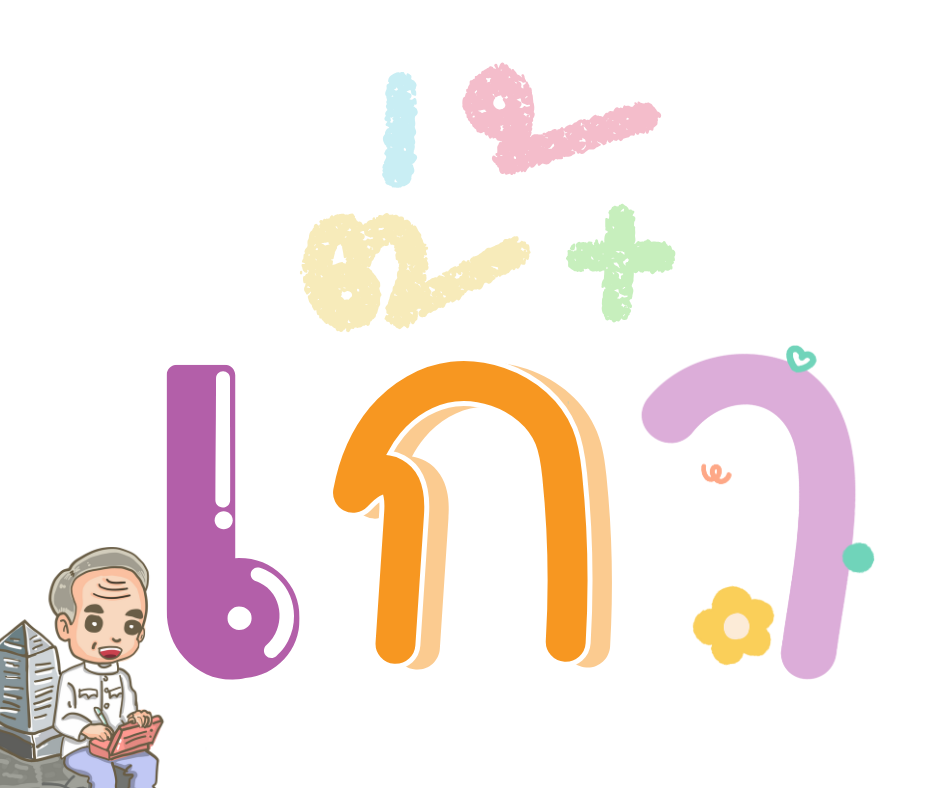
Not every tone mark applies to every consonant class. For example, high- and mid-class consonants accept all tone marks except those that are historically restricted, while low-class consonants use tone marks differently to compensate for their default pitch characteristics.
A simplified example of base tone patterns:
This is the core mechanism behind how Thai tone rules distribute tones before marks are applied.
Tone marks modify base tones differently depending on context. For instance:
These rules allow learners to predict tones even without memorizing every word individually.
While Thai tone rules are consistent, there are exceptions due to:
However, exceptions constitute a small percentage of daily vocabulary. For beginners, focusing on the consistent system is the most effective strategy for understanding how Thai tones work.
Applying tone rules to actual examples helps illustrate the process without overcomplicating it. These examples use standard Thai pronunciation.
ก /kaː/ → mid tone
ง่า /ŋâː/
ผัก /pʰàk/
These examples demonstrate the regularity of the tone system and how tone class interacts with syllable type.
Beginners often struggle with tonal accuracy because instruction can become unnecessarily complex. Research in second-language acquisition suggests that simplified rule systems improve early performance and reduce cognitive load. Applied to Thai, beginners benefit from:
Study-based findings indicate that structured tone recognition training improves long-term tonal comprehension. Visual aids and spaced repetition tools are also effective. For example, vocabulary systems discussed in the internal article “Why Thai Flashcards Improve Vocabulary Learning” can help maintain consistent exposure to tones in context.
Standard Thai tones are widely taught due to their official role in education, media, and government. However, regional varieties—Northern Thai, Isan, and Southern Thai—use different tonal systems. Modern research shows that while tonal patterns differ, the core principles of tonal classification and pitch contour contrast remain consistent.
For learners focusing on Standard Thai, exposure to native-speaker audio and dictionary-based phonetic notation remains important.
Romanization systems attempt to represent tones using diacritics or numerals. Common systems include:
Because RTGS does not indicate tones, linguists recommend IPA-based systems for accuracy. Understanding how tones work requires direct engagement with Thai script rather than sole reliance on romanization.
This article has explained how Thai tones work by focusing on the three key components: tone classes, live/dead syllables, and rule-based tone distribution. The goal has been clarity and academic accuracy without unnecessary complication. The explanations are grounded in widely accepted linguistic descriptions of the Thai tonal system and supported by external scholarly references and internal learning resources.